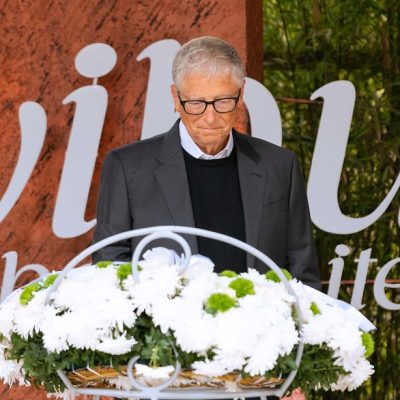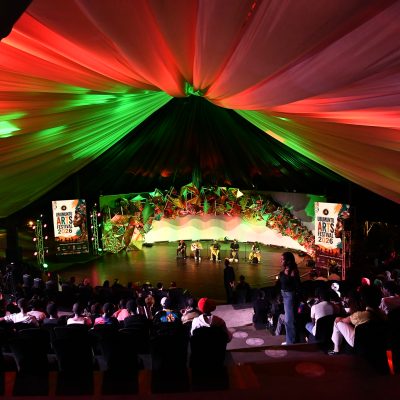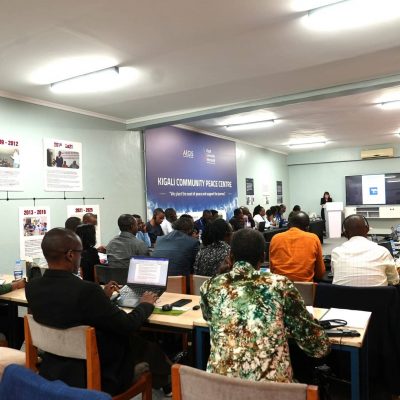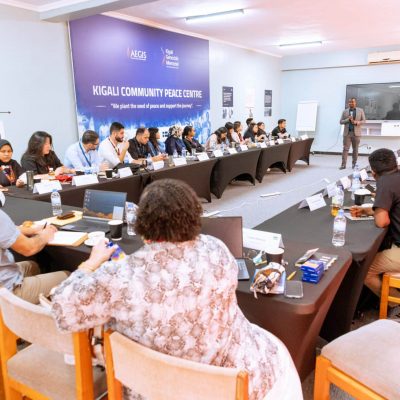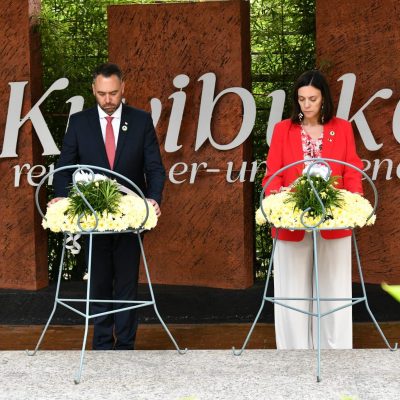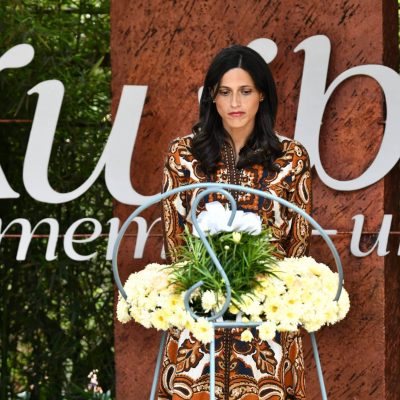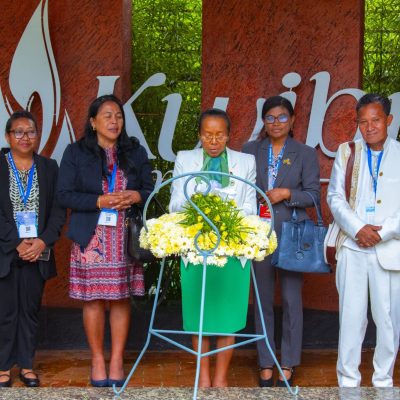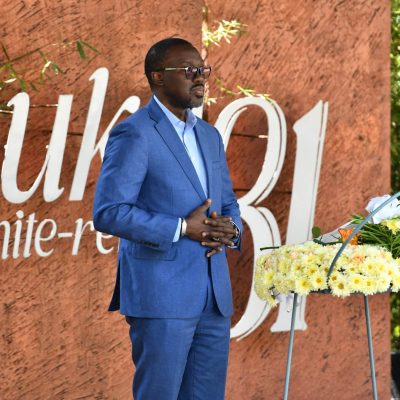
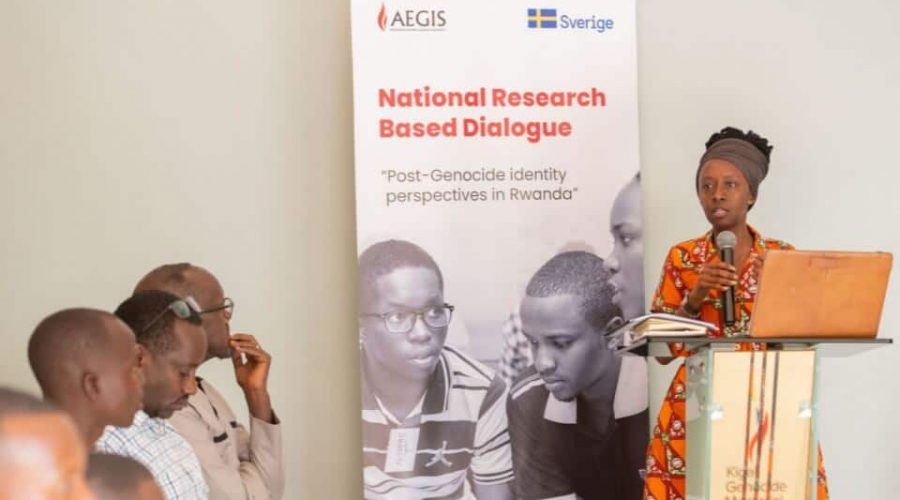
On 17 January, Aegis hosted Rwanda’s first national research-based dialogue at the Kigali Genocide Memorial on the theme ‘Post-genocide identity perspectives in Rwanda’.
Staged as part of the Action for Sustainable Peace, Inclusion, Rights & Equality (ASPIRE) programme, the dialogue enabled researchers who are studying peacebuilding and genocide prevention to share their evidence-based findings and discuss related issues with young people that they encounter in their communities. The event also brought in decision makers whose policy development may be informed by conclusions from the research, and by the dialogue with young people.
Dr Furaha Umutoni Alida, a researcher and lecturer at the University of Rwanda’s Center of Conflict Management, presented key findings of her research entitled; Where do we belong? Identity and autochthony discourse among Congolese Rwandophones. Her aim was to explore the narrative of ‘Rwandophones’ on their lived experiences when it comes to legitimizing their sense of belonging in the Democratic Republic of Congo. Her research explored the lives of Kinyarwanda-speaking Congolese communities and their struggle for acceptance as legitimate Congolese.
“A person’s identity can be defined when a person answers questions about themselves; who are you? What is your name? Where do you come from?”, Dr Emmanuel Hakizimana, a researcher from MINUBUMWE, commented during the dialogue. “This is what I believe defines the identity of a person. Many people use nationality to deny identity to certain groups of people in a given country. Identity is related to how a person is brought up.”
Young people pointed out different challenges that they meet when it comes to post-genocide identity and learning about the history of genocide in their families and communities. “Something that I see in young people these days is that they are not willing to know anything related to the 1994 Genocide against the Tutsi. These youngsters were born after the Genocide and they feel that it is not their concern and as a result, they have no knowledge about it,” commented Pascal Bayingana, a youth champion trained by the Aegis Trust. “You find that they do not know when the genocide started, who were the perpetrators, and the general history of Rwanda.”
Referring to his book ‘Reconciliation is My Lifestyle’ Dr Antoine Rutayisire, a genocide survivor and author, showed how survivors, perpetrators and refugees who returned to Rwanda after 1994 have crises of identity which helps to explain why these can be seen in young Rwandans born after the genocide. “We are in a crisis of identity which is seen among young people who were born after the genocide, who also in some way or another define identity from their roots, which are embedded in ethnic discrimination,” said Dr Rutayisire.
He went on to suggest that a spirit of citizenship can help heal the identity crisis seen among a lot of Rwandans. “Let us continue to emphasize the spirit of citizenship. ‘Ndi Umunyarwanda’ should be heavily emphasized in the different spheres and sectors of our country. We should master the narrative of our history so that we can properly teach it to our children in order to achieve the Rwanda we want and the world we want. We should see all Rwandans in a narrative of togetherness and unity. Let us a build a Rwanda for Rwandans, putting citizenship above all else.”