Tools for Peace Education
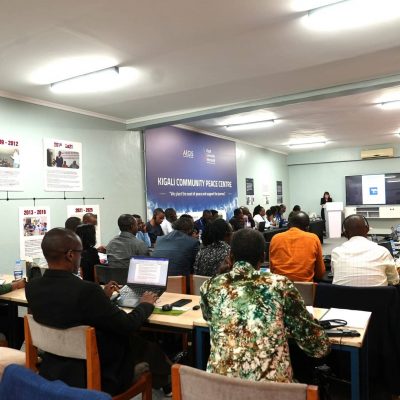
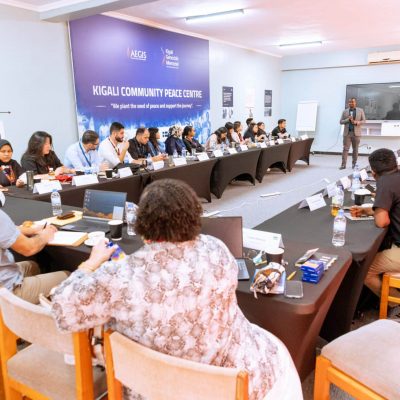
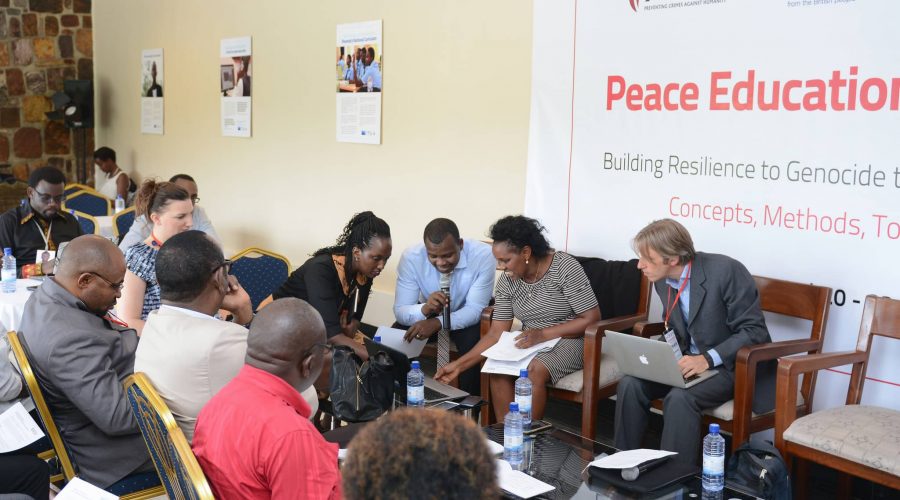
The second day of the Aegis Trust’s three-day Peace Education colloquium began with a panel on different tools to deliver peace education content in Rwanda. The key question for discussion was how to identify the right teaching and learning tools for the right context.
Panellist Dr Joyce Musabe, Deputy Director-General in charge of curriculum and pedagogical materials at the Rwanda Education Board, said that the Government included Peace and Values in the schools curriculum to help students construct world views that reflect the reality of the peace process and that prepare them to live in an era of peace and reconciliation. “The goal of peace education is to address the problems of conflict and explore the path to a peaceful future,” Dr Musabe said.
She added that one of the most common tools to deliver peace education in Rwanda is the use of testimonies – from genocide survivors, rescuers, genocide witnesses and other bystanders as well as peace builders that have been translated into understandable stories.
Digital Testimonies
Dr Claudia Wiedeman from USC Shoah Foundation then spoke on the use of testimony in promoting ‘active bystandership’. “When individuals engage with testimony they often experience attitudinal and behavioural changes that make them more likely to contribute to civil society”, she said. One of the students who participated in the programme testified: “I have learned to forgive no matter what wrong is done to me and always maintain peace.”
Dr Wiedeman also explained IWitness, an educational website developed by USC Shoah Foundation that provides access to full life histories and testimonies of survivors and witnesses to the Holocaust and other genocides for guided exploration. Secondary school teachers and their students access these resources by entering a virtual classroom. IWitness was an important component of the recently concluded Rwanda Peace Education Programme led by the Aegis Trust.
Dr Wiedeman said that the impact of their work through the Rwanda Peace Education Programme was encouraging. “Over the last three years, we have been working with teachers to develop their skills, help them speak to other teachers and use educational testimonies that are relevant for them. We didn’t expect that so many teachers would continue to use IWitness and now they have even created their own lessons based on their experience and the testimonies we have. We love to see this kind of outcome,” she said.
Wide-ranging discussions
At another panel, attendees discussed participatory and conflict sensitive approaches in their peace education programmes. Some of the topics covered by presentations included:
- The power of participatory design and evaluation in enhancing peace education outcomes (Dr Carolyne Ashton)
- Learner-centred education in delivering peace education to teachers and students (Prof Eugene Ndabaga, College of Education, University of Rwanda)
- The Genocide Archive of Rwanda and the role of storytelling in Rwandan peace education (Dr Erasme Rwanamiza, Aegis Trust)
- Do No Harm considerations in the Rwandan context (Esther Tidjani, Civil Peace Service, GIZ Rwanda)
“The ‘Do No Harm’ approach helps us to look at the context, identify connectors and dividers to the conflicts and see how the intervention you plan is going to influence people,” said Esther Tidjani. “If this analysis is done in the right way, it helps to improve your peace education programme.”
Aegis’ Path to Peace
The day was concluded with break out groups which discussed individual values and skills with an emphasis on critical thinking, empathy, trust and personal responsibility – the key elements of Aegis’ peace education methodology.
Jean Nepo Ndahimana, Education Facilitator at the Aegis Trust, shared his experience from three years of training teachers and students on empathy. He said that a good teacher should provide experiences that prepare students to respond well in difficult situations. He said that when this is done, empathy can develop and young people end up putting themselves in the position of others. “It is necessary for educators to design experiences that draw people into the shoes of others. And then ask them what they feel, what they think they should do, and how they should respond.”
Aegis CEO Dr James Smith emphasised the importance of empathy in action. “It is essential to understand how empathy can be built up through education, considering how you feel and how somebody else feels, but it is also crucial that empathy end with action,” he said.
Stay tuned…
The third and final day of the Peace Education Colloquium focuses on measuring the impact of peace and peace education as well as capturing recommendations from the conference.
Photos