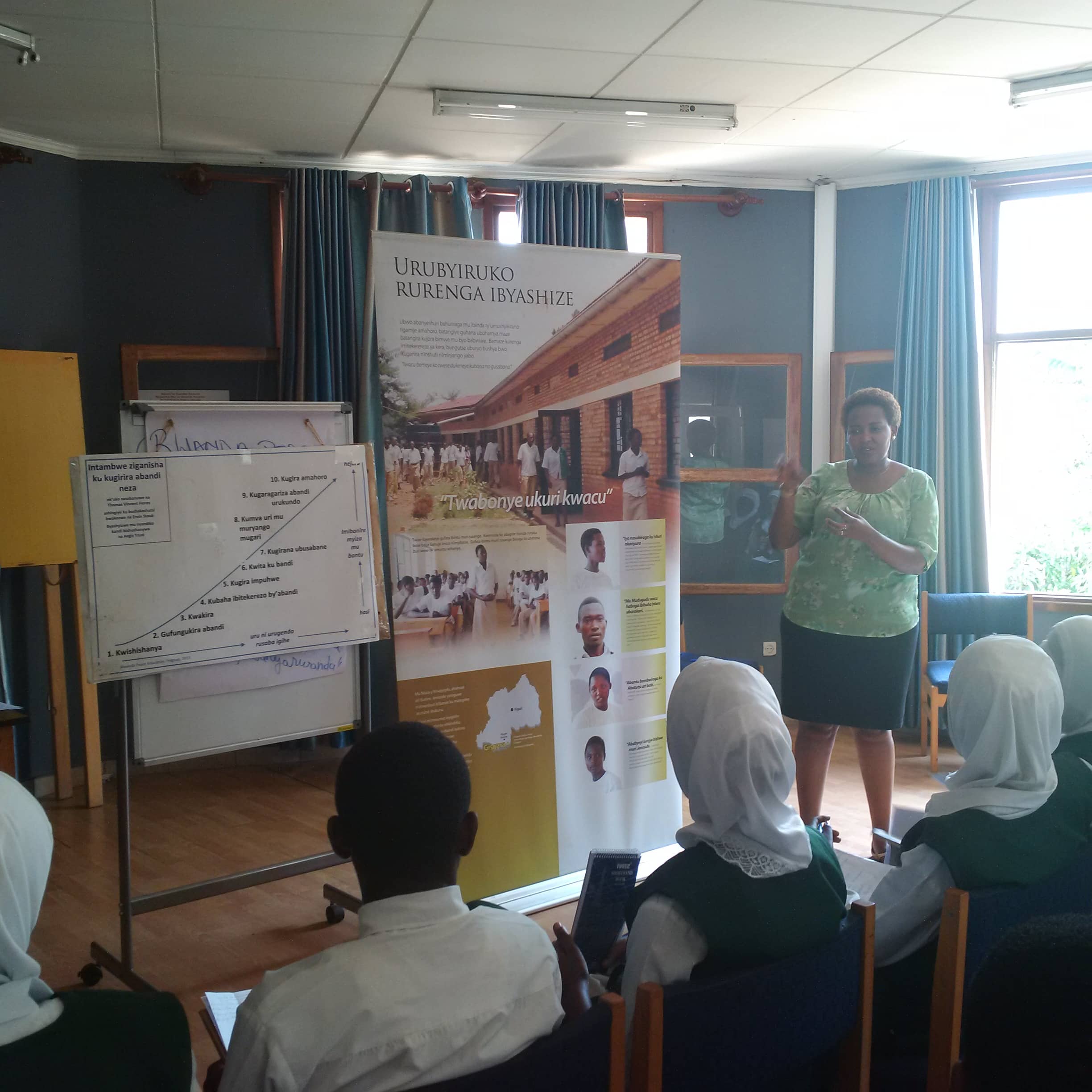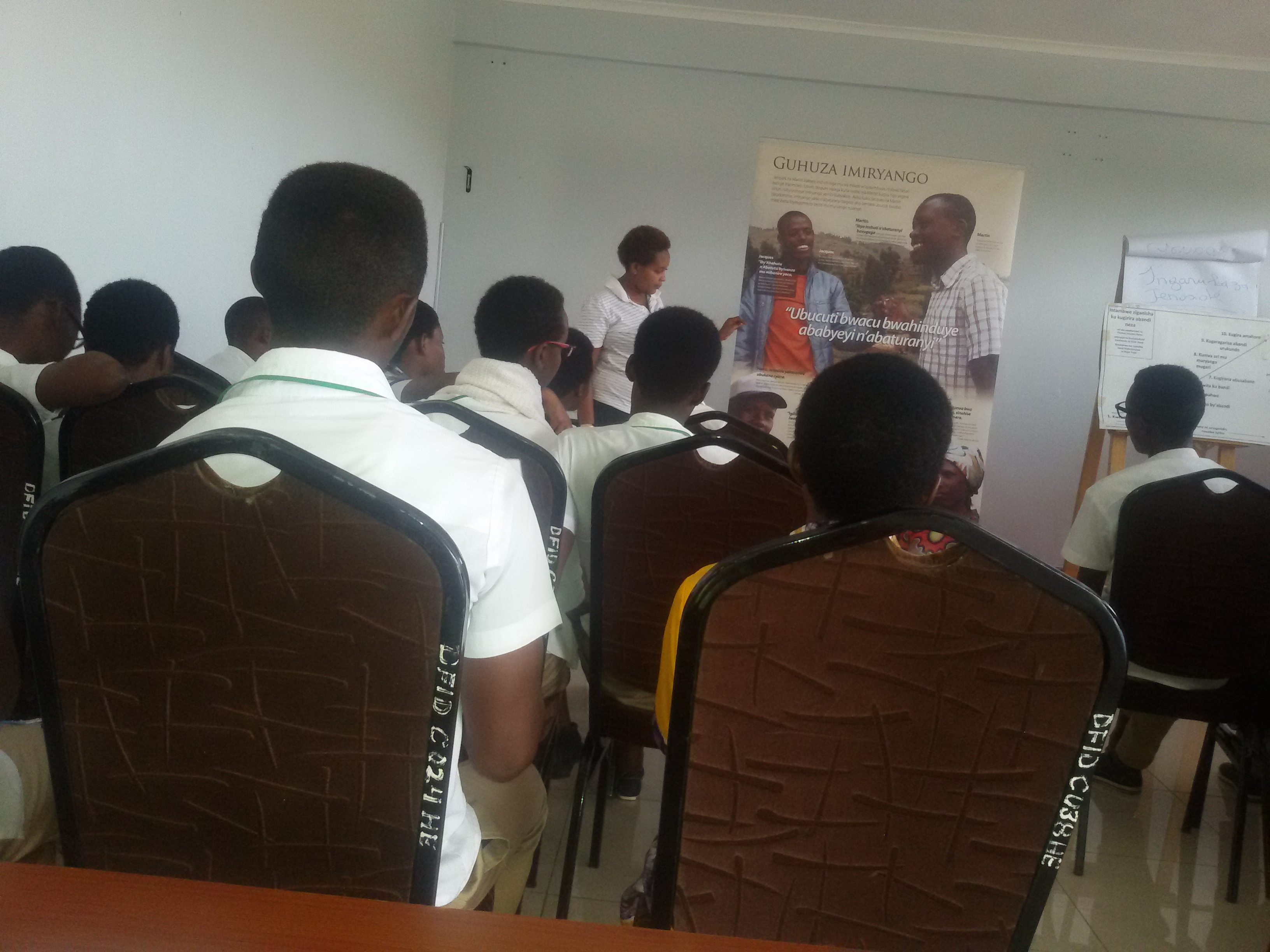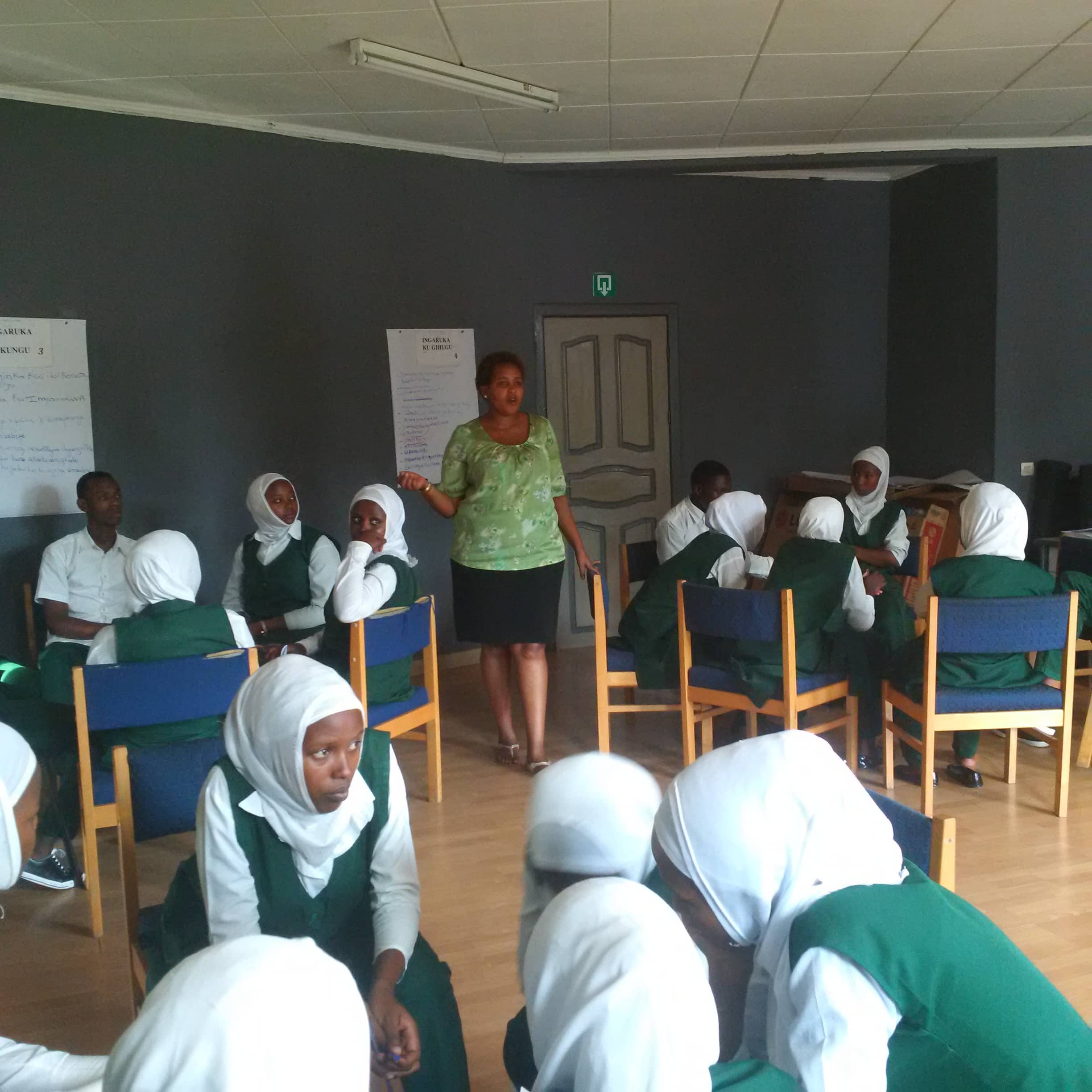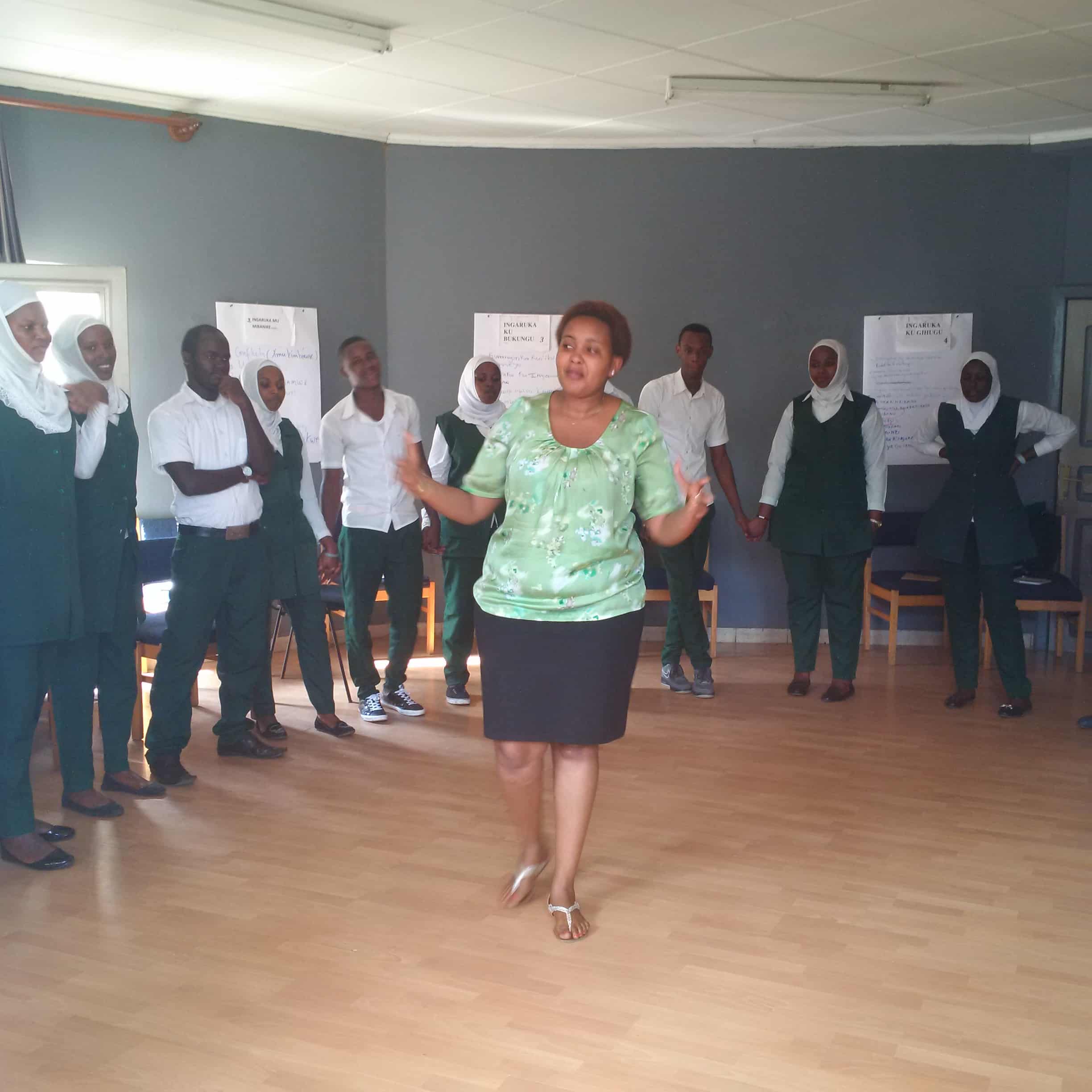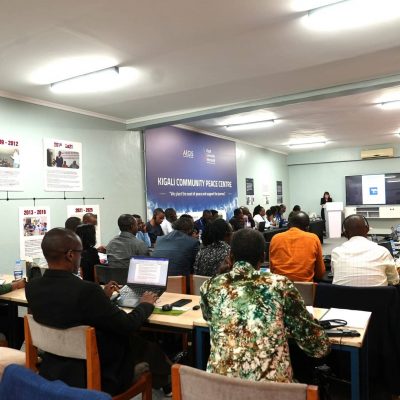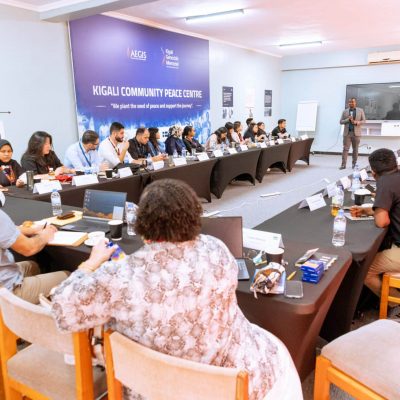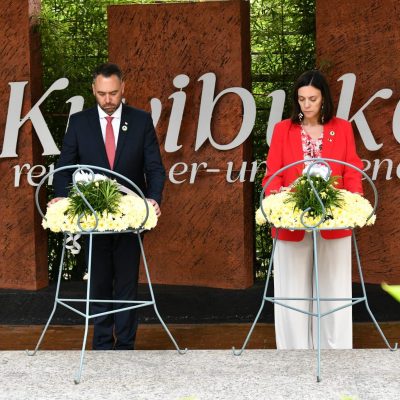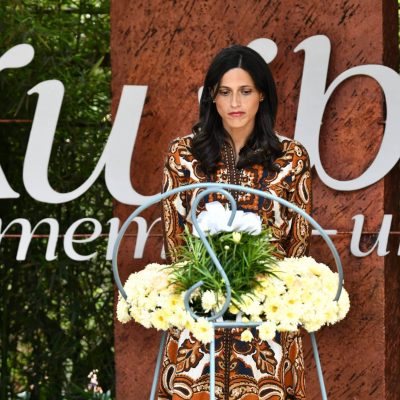
The Kigali Genocide Memorial runs a range of educational programmes that teach about the Genocide against the Tutsi. These include onsite lessons, outreach events and tours to other memorials sites across the country. A dedicated team of educators runs these programmes.
Meet one of them, Janviere Uwase, and find out why she is so passionate about teaching about peace and remembrance.
What does it mean to teach about the Genocide and peace building?
Because I deal with students most of time, people call me a teacher but I consider myself a facilitator. As a facilitator, I guide students’ discussions so that we create a self-learning environment. My colleagues and I help students to find answers by themselves. We take this approach because understanding the history of genocide and building a better future requires dialogue, the exchange of ideas and personal reflection.
What teaching methodology do you use?
We use an academically researched methodology called the facilitated participatory approach. This learner centred model includes story-telling, group discussion, physical activities and individual reflection. It allows ideas to flow and develops critical thinking and problem solving capacity in our students.
Why did you choose the participatory methodology?
Confucius said, “Tell me and I will forget, show me and I may remember, involve me and I will understand”.
Critical thinking, problem solving and decision making are key to preventing genocide, violence and building sustainable peace. Learning about these things can’t happen in a passive environment. Students need to participate and find solutions within themselves.
How many students do you receive every year?
In 2015 we received 2,300 students. This year we hope to increase the number to more than 3,000.
How many students do you receive per school?
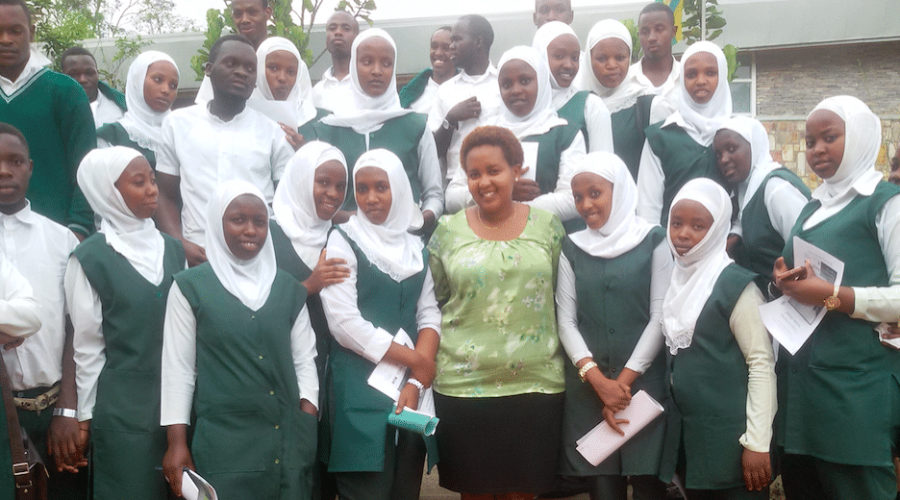
We receive 20 students per school. Schools choose students to represent others. They nominate those who can share their new peace building knowledge with the rest of their school or community.
How old are the students who come to the Kigali Genocide Memorial?
The students we receive are between the ages of 12 and 21.
Why do you focus on that age group?
At that age, one is not too young nor too old to not create change. We must also remember that this is a generation that didn’t experience the Genocide directly. They need to know the causes and consequences of the Genocide, how to prevent future conflicts and how to be active citizens.
What should we know about the programme?
The Rwanda Peace Education Programme helps student understand what Genocide is and its consequences so that they learn how to prevent it. The programme also promotes positive values that include pluralism and personal responsibility, empathy, critical thinking and action in order to build a more peaceful society.
How long have you been involved in the programme?
I have been facilitator for almost three years now.
What do you like about teaching peace building to young students?
I like to see young people change and I enjoy teaching them because they are still open minded and easy to talk with. I am especially happy when a student tells me:
“I always thought that it didn’t concern me whenever I saw my schoolmates fight or have conflict but now I understand that building peace concerns me too.”