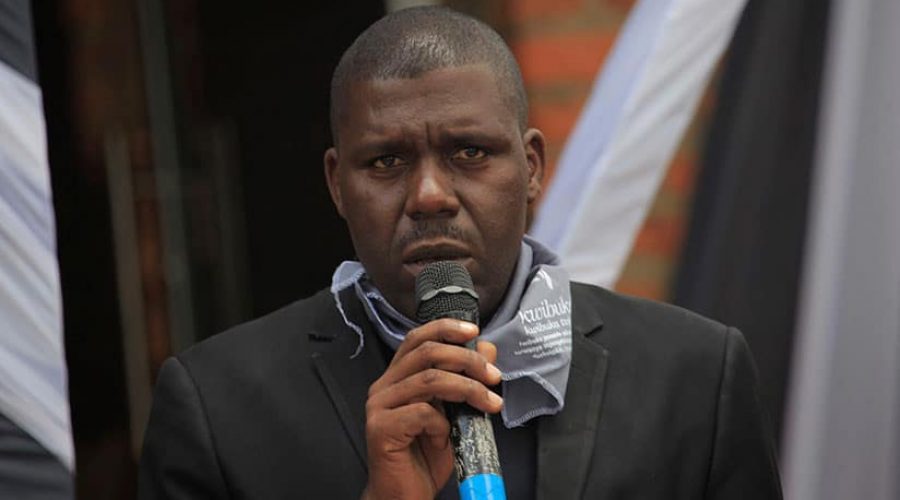
Some, would have expected Silas Ntamfurayishyari to become a rescuer. He was a soldier, a part of the ex-FAR, and a member of the military that participated in, and sparked the intensification of, the 1994 Genocide against the Tutsi. Yet despite the actions and precedent of his fellow soldiers, Silas rescued 18 people by accompanying them to Burundi.
Silas learned early in life the value of living in harmony with his fellow people. His family, especially his father, taught him kindness and open sharing. Their value for other people extended beyond the ethnic divide. His understanding of this division, beyond the overheard terms “Hutu, Tutsi, and Twa,” came only in school when he witnessed the brutal harassment of a girl who was rumoured to be Tutsi. Yet his own family discouraged such division- his brother even hid a Tutsi colleague being targeted in 1992 until he could flee.
In fulfilling his dream of joining the military, Silas discovered quite a different set of values. The military had long been full of hate propaganda and genocide ideology, and he was instructed to watch his Tutsi partners closely. This minority of soldiers was faced with distrust and a great deal of persecution.
A few days after the Genocide began, the soldiers in his own region chose to attack Nyamata. In this and other attacks, they claimed to be going out to loot, but eventually engaged gleefully in the killings and the intrigue around the hunt. Silas is certain that their actions triggered the Interahamwe to became increasingly active with the encouraging knowledge that the soldiers had little interest in guaranteeing the security of the citizens, and even participated in the brutality.
He struggled immensely with the sounds of his fellow soldiers bragging about their murders, and with the knowledge that the Tutsi families he had befriended in the community were likely being targeted. He came to terms with the severity of the situation- and the hopelessness of questioning it with his relatively low military ranking- while on patrol and while out talking and praying with the Christian community into which he’d recently been baptised. Finally, he reached his own crisis point.
He knew that if he were discovered to be helping Tutsis, he would be killed. But he made the decision he felt he must. “I wanted to help at least one person,” he remembers, “So I didn’t care if I was going to be killed for doing it.”
He first saved a girl who had just lost her parents and brother, taking her from house to house for refuge, often begging for help, and asked another woman from church to let him know about others hiding so he could help them flee as well. With the help of two other soldiers, he set out on a bicycle to get a sense of which paths to take, and finally accompanied by a large group of people across the border to Burundi.
Back in Rwanda, Silas found an older woman and a child being harassed by a group of Interahamwe. Creatively utilising his position as a soldier, he deceived them into leaving him alone with her to shoot her, but instead hid her in the bushes, calling on God for her trust and safety, and took her and the child to Burundi that night.
This time, he returned to a set of rumours in his military camp about a Christian soldier taking people to Burundi. Warned by fellow soldiers- one of which was eventually killed- about his impending arrest and execution, he escaped to Burundi himself.
The Burundian customs office greeted his Rwandan military status with extreme concern. He was saved only by the word of the refugees who had told the story of their rescue by a Christian soldier. Now, the novelty of his arrival in the camp drew major Burundian political figures and television stations. Though they insisted that he remain at a gendarmes’ camp due to his accustomed life as a soldier, he was determined to live with his fellow Rwandans in the refugee camp.
Once the Inkotanyi (RPF) took over the Bugesera region, he grasped a new dream and joined their forces. After the Genocide, when the new government was established, he was trained and officially received into the military.
Today, he regrets only that he could not help more people. Yet his family looks on his actions with pride, and those he rescued greet him with joy, as a family member. The older woman, in fact, has become a mother to him, and he serves as a father figure for the child with whom he discovered her. Immensely grateful for them, he considers them “the family that God gave [him.]”
Admired by people in his community and across the world, his message draws back to the values of his childhood. He calls us all to live with one another in harmony. As Silas puts it, “we need to fight for peace in order to have it ourselves.”